
Edmonton Just Tightened Its Lodging House Rules. Here's What Changed and Who It Affects
Edmonton Real Estate News
Edmonton Just Tightened Its Lodging House Rules. Here's What Changed and Who It Affects
The Direct Answer
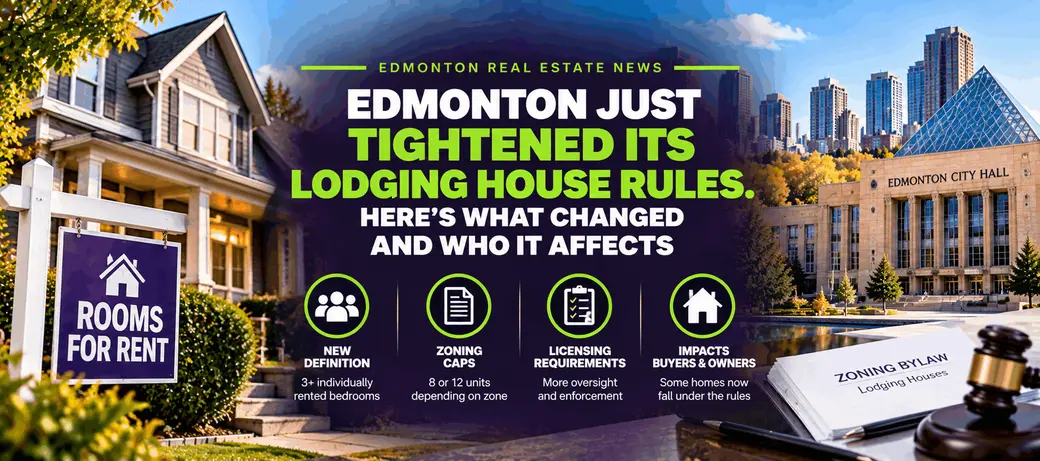
On Tuesday, September 22, 2026, Edmonton city council voted 9-3 to change the zoning bylaw rules for lodging houses, the homes where individual rooms are rented out separately. The biggest change is the definition. A lodging house is now a home with three or more individually rented bedrooms, down from four or more. That means some homes that were not regulated as lodging houses before now fall under the rules. Councillors Ashley Salvador, Anne Stevenson and Jo-Anne Wright voted against, and Councillor Aaron Paquette was absent. The City says the goal is to make illegal lodging houses easier to identify, instead of relying on neighbours to complain.
What Counts as a Lodging House?
The definition
Edmonton's zoning bylaw defines a lodging house as a dwelling containing three or more sleeping units, where each sleeping unit is rented individually.
Read the definition in the City's Zoning Bylaw 20001 and find more details on the City's lodging houses page.
In plain language, two things have to be true at the same time: there are three or more rooms that people sleep in, and each of those rooms is rented on its own. The words "rented individually" are the key. Here is how that plays out in a few common situations.
- Roommates on one shared lease. If three roommates sign a single lease for the whole home together, commentary on the bylaw says that is not what the rules are aimed at.
- Separate agreements for each room. If you own a home and rent three bedrooms to three people on three separate agreements, that matches the definition. The definition does not mention bathrooms, so sharing one bathroom does not appear to change that.
- Signs an officer looks for. Individually numbered rooms, a private bathroom for each room and a lock on each door are treated as signs of a lodging house. They are signs, not the definition itself.
- Grey areas. A tenant who sublets rooms to roommates, or a home where the arrangement is informal, can be harder to call. I could not confirm how the City treats those, and I would not assume either way.
Because the details of your own arrangement matter, ask the City (call 311) about your specific situation before deciding whether you are covered, and consider getting the answer in writing. This is general information, not legal advice.
What the New Rules Say
Lodging houses are now limited to certain residential zones, and the caps depend on the zone. In small scale (RS) and small scale flex (RSF) zones, a lodging house is capped at eight units, and it cannot be row housing or multi-unit housing. In small-medium scale transition (RSM) zones, the cap is 12 units, and it still cannot be row housing. Lodging houses are also not allowed inside a secondary suite. Here a "unit" means an individually rented room.
To operate legally, a lodging house needs a development permit, a building permit and a business licence. The bylaw also points to individually numbered rooms, a private bathroom for each room and individual door locks as signs that a home is being run as a lodging house. Those markers are what give bylaw officers something concrete to look for.
Why the City Did It, and the Pushback
According to reporting on the vote, the City received 354 complaints about lodging houses between 2020 and 2025, mostly about increased activity, traffic, parking and disruptive behaviour. Council wants the rules to make enforcement more proactive. The three councillors who voted no raised concerns about the approach. Councillor Stevenson argued that the differences between a lodging house and other kinds of homes are "incredibly minor and frankly irrelevant to land use impacts." A local municipal-watch outlet, the Alberta Tribune, also pointed out that the City has not published a count of how many existing homes the lower three-bedroom threshold would newly regulate, which makes it hard to size the effect. Expect questions about how the rules will be enforced in practice.
What the Penalties Are
According to CBC's reporting on the vote, fines for an illegal lodging house start at $1,000 for a first offence, rise to $2,500 for a second offence, and double with each offence after that, up to the $10,000 maximum that Alberta's Municipal Government Act allows. Property inspectors can issue those fines. Officials have also said they are preparing enforcement action against more than 300 suspected unauthorized lodging houses. The official penalty rules sit in the enforcement section of the City's Zoning Bylaw 20001, and the City's lodging houses page has more details. Check both for the current wording, since the figures above come from news coverage.
When Do the New Rules Start?
The coverage I found does not give a start date, and it does not say whether existing lodging houses get a transition period. I would not assume either way. The City's lodging houses page is the place to confirm the timing, and calling 311 is a good way to get an answer about your specific property.
Should You Get Licensed? What Would Motivate an Owner
For an owner renting rooms out separately, the reasons to get licensed are mostly about avoiding risk. The rules are now designed to be easier to enforce, with numbered rooms, private bathrooms and individual locks all treated as signs of a lodging house. A fine that starts at $1,000 and doubles is real money, and it is on top of the cost of correcting the problem. When you sell, a buyer's lawyer, lender or appraiser may ask whether room-by-room income is a permitted use, and unpermitted income may not count toward the price. A building permit also means a safety review, and insurers generally care how a property is used, so it is worth asking your insurer how unpermitted rental use would affect coverage. Being licensed also lets you advertise and operate openly.
The reasons to hold back are the cost of permits and the licence, and the fact that not every setup qualifies. The caps are eight units in RS and RSF zones and 12 in RSM zones, and lodging houses are not allowed in row housing or secondary suites. If you rent three or more bedrooms individually, a practical first step is to confirm your zone, count how many rooms you rent separately, and ask the City what permits and licence your property would need. Then talk to your insurer and a real estate lawyer before you decide. This is general information, not legal advice.
What It Could Mean for Edmonton Buyers, Sellers and Investors
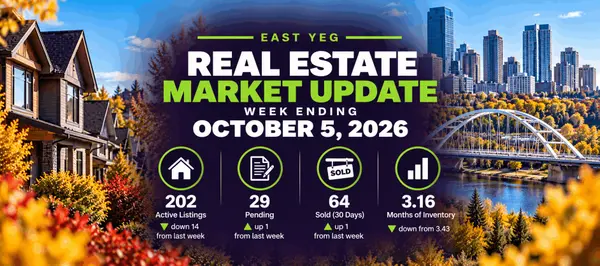
For most owner-occupied homes, nothing changes. This is aimed at homes where separate people rent individual rooms, often with their own locks and sometimes their own bathrooms. If you own a home like that, or you are thinking about buying one as an income property, the first question is how it is rented today and whether it has the permits it would now need. In East YEG (East Edmonton), where communities like Kenilworth are mostly single-detached homes, this is worth knowing about before you buy, because the income a property earns depends on whether that use is allowed. If you are selling a home that has been rented by the room, it is a good idea to confirm the permits and licence are in place before listing, since a buyer's lawyer and lender are likely to ask. Look at this week's East YEG market update for how the market looks right now. None of this is legal advice, so check the City's lodging house page or speak with a real estate lawyer about your specific property.
Thinking About Selling in East YEG?
What Would It Take to Get Top Dollar for Your Home?
Between negotiation trends, price reductions, and how fast homes are actually moving right now, the numbers above only tell part of the story. I'll give you a straight answer on what your specific home is worth today, and what it would take to maximize your sale price in this market.
Get Your Free Home Valuation Book a Free Strategy CallFrequently Asked Questions
What changed in Edmonton's lodging house rules?
On September 22, 2026, Edmonton city council voted 9-3 to define a lodging house as a home with three or more individually rented bedrooms, down from four or more. Lodging houses are capped at eight units in small scale zones and 12 in small-medium scale transition zones, and are not allowed in row housing or secondary suites.
What does a lodging house need to operate legally in Edmonton?
A lodging house needs a development permit, a building permit and a business licence. The bylaw also treats individually numbered rooms, a private bathroom for each room and individual door locks as signs of a lodging house.
Does renting bedrooms to roommates make my home a lodging house in Edmonton?
Commentary on the bylaw says three roommates on one shared lease are not covered. A lodging house is a dwelling with three or more sleeping units that are each rented individually, and the definition does not mention bathrooms, so separate agreements for each room can count even if the bathroom is shared. Confirm your situation with the City by calling 311.
What are the fines for an illegal lodging house in Edmonton?
Reporting on the new rules says fines start at $1,000 for a first offence, rise to $2,500 for a second offence and double with each offence after that, up to the $10,000 maximum allowed under Alberta's Municipal Government Act. Property inspectors can issue the fines.
Jason Beattie
REALTOR® | eXp Realty | BT Group
780-791-9633 | Jason.Beattie@eXpRealty.com
Book a Free Strategy Call
Categories
- All Blogs (93)
- downsizing (16)
- East YEG (46)
- Eco-friendly Homes (1)
- Edmonton Bylaws (3)
- Events & Community News (34)
- First Time Home Buyer (36)
- Gardening & Landscaping (1)
- Home Buying Tips (50)
- Home Insurance (5)
- Home Selling Tips (38)
- How to (14)
- increase home value (15)
- Interior Design (2)
- Local Market Trends (57)
- market Influences (66)
- Market Update (47)
- Migration (4)
- Mortgage Info (4)
- Moving & Relocation (60)
- Neighborhood Profiles (48)
- Real Estate FAQs (78)
- Real Estate Investment (7)
- Real Estate Laws & Regulations (4)
- Technology in Real Estate (2)
Recent Posts









"With 25+ years in Edmonton real estate, I track weekly sales activity across all 13 East YEG neighbourhoods so buyers and sellers get real numbers, not guesswork. If you're weighing a move in East Edmonton, I'm happy to walk you through what the data means for your street."