
Fixed Mortgage Rates Are Climbing in Canada. Here’s Why, and What It Could Mean for Edmonton Buyers and Sellers

Alberta Real Estate News
Fixed Mortgage Rates Are Climbing in Canada. Here's Why, and What It Could Mean for Edmonton Buyers and Sellers
The Direct Answer
Since early September 2026, fixed mortgage rates in Canada have been rising, even though the Bank of Canada has not changed its own rate. The reason is the bond market. Fixed mortgage rates follow the yield on the 5-year Government of Canada bond, and that yield jumped from roughly 2.6% before the Middle East conflict began in late February to a 52-week high of about 3.73% in late September. Lenders have passed much of that increase on. Variable rates have stayed put, because the Bank of Canada's policy rate has sat at 2.25% since October 29, 2025. The next Bank of Canada decision is on October 28, 2026, and it will include a new Monetary Policy Report. All figures below are as of October 19, 2026, and rates move quickly, so treat them as a snapshot.
What Is Driving It
Bond yields. The 5-year yield peaked near 3.73% in late September, closed at 3.575% on October 14, and dropped to about 3.48% early on October 15 as investors moved into government bonds. Mortgage pricing can lag the bond market, so those recent drops may not show up in bank rates right away.
Inflation and oil. Statistics Canada reported today that inflation rose to 3.1% in September, up from 3.0% in August. Gasoline prices were 27.8% higher than a year ago, tied to higher crude oil prices from the Middle East conflict. Without gasoline, inflation was 2.2%, and the Bank of Canada's preferred core measures were lower, at 1.9% (CPI-median) and 1.8% (CPI-trim). That split is a big part of why economists disagree about what the Bank does next.
Why fixed rates moved first. Bond traders react before the central bank does. In this case, they started pricing in the chance of future rate hikes, so fixed rates rose through September and October while the Bank itself stood still.
What Lenders Have Done
According to Canadian Mortgage Trends, here are some of the recent moves. These are advertised rates, which can differ from what a borrower is offered through a broker.
| Date | Lender move |
| September 29, 2026 | CIBC and TD raised select 3-year and 5-year fixed rates. |
| October 7, 2026 | BMO raised its 3-year and 5-year fixed rates, with its standard 5-year fixed reaching 5.14%. |
| October 14, 2026 | Scotiabank raised its advertised 2-year fixed rate by 0.10 points to 5.24%. |
| October 15, 2026 | TD raised its advertised rates again: 1-year fixed up 0.20 points to 5.69%, 2-year up 0.10 to 5.39%, 3-year up 0.10 to 5.24%, and 5-year fixed up 0.05 to 5.39%. |
Reporting also says BMO, CIBC, National Bank and RBC have all raised rates recently, and that major-bank fixed rates have generally risen 0.05 to 0.20 points across selected terms since early October.
Because variable rates have not moved, the gap has widened. Canadian Mortgage Trends quoted Clinton Wilkins as saying that some variable offers sit more than a full percentage point below comparable fixed rates. Historically about 60% of borrowers choose a 5-year fixed mortgage. Right now, he says, more than 60% are choosing variable. That is a bigger bet on the Bank of Canada's next moves, and views on those moves are split. Some mortgage experts expect rate hikes, while a TD economist has said the case for hiking is not compelling.
What Happens Next
The Bank of Canada's next announcement is October 28, 2026. A hold at 2.25% is the most common expectation, but the odds of a hike are quoted differently by different sources and on different dates, so treat any single figure with caution. Yields have eased in the last week, which could take some pressure off fixed rates, though it may take time to show up. The Monetary Policy Report on October 28 will also give the Bank's updated inflation forecast.
What It Could Mean in East YEG
For buyers, higher rates reduce how much house a monthly payment buys. As an illustration, take a $430,000 home, which is close to the median sold price in East YEG (East Edmonton), with 20% down and a 25-year amortization. That is a $344,000 mortgage. Each half-point change in the rate moves the monthly payment by roughly $99, and a move from 4.5% to 5.4% adds about $176 a month. This is an illustration with standard Canadian semi-annual compounding, not a quote, and your own numbers will differ.
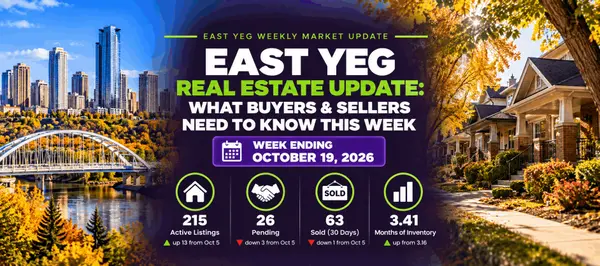
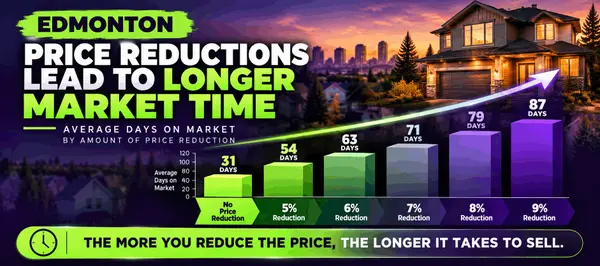
For sellers, buyers' budgets are the thing to watch. As of October 19, 2026, East YEG had 215 active listings and 3.41 months of inventory, 40% of active listings had a price reduction, and the median sale took 30 days. If higher payments make some buyers pause, pricing and presentation matter even more. The costs of owning also keep adding up, from mortgage payments to Edmonton's 6.9% property tax increase, so buyers are looking closely at every line.
If you are buying, ask your mortgage professional about holding a rate while you shop, and about the difference between fixed and variable for your situation. If you are renewing soon, compare offers instead of accepting your lender's first one. And if you are in a deal with a financing condition, remember that lenders have steps to complete before funds are released, which is part of why a purchase can take longer to close than people expect, as I explain in How Long Does It Take to Close on a House in Alberta? This is general information, not financial advice, so please speak with a mortgage professional about your own situation.
Thinking About Selling in East YEG?
What Would It Take to Get Top Dollar for Your Home?
Between negotiation trends, price reductions, and how fast homes are actually moving right now, the numbers above only tell part of the story. I'll give you a straight answer on what your specific home is worth today, and what it would take to maximize your sale price in this market.
Get Your Free Home Valuation Book a Free Strategy CallFrequently Asked Questions
Why are fixed mortgage rates rising in Canada?
Fixed mortgage rates follow the 5-year Government of Canada bond yield, which rose from about 2.6% before late February 2026 to a 52-week high near 3.73% in September. Higher oil prices pushed up inflation, and bond traders began pricing in possible Bank of Canada hikes, so lenders raised fixed rates while the Bank's own rate stayed at 2.25%.
What is the Bank of Canada's rate, and when is the next decision?
The Bank of Canada's policy rate is 2.25%, unchanged since October 29, 2025. The next announcement is October 28, 2026, and it will include a new Monetary Policy Report. Inflation was 3.1% in September 2026, up from 3.0% in August.
Jason Beattie
REALTOR® | eXp Realty | BT Group
780-791-9633 | Jason.Beattie@eXpRealty.com
Book a Free Strategy Call
Categories
- All Blogs (103)
- downsizing (17)
- East YEG (56)
- Eco-friendly Homes (1)
- Edmonton Bylaws (5)
- Events & Community News (42)
- First Time Home Buyer (38)
- Gardening & Landscaping (1)
- Home Buying Tips (53)
- Home Insurance (5)
- Home Selling Tips (40)
- How to (14)
- increase home value (16)
- Interior Design (2)
- Local Market Trends (65)
- market Influences (75)
- Market Update (50)
- Migration (6)
- Mortgage Info (6)
- Moving & Relocation (69)
- Neighborhood Profiles (53)
- Real Estate FAQs (88)
- Real Estate Investment (11)
- Real Estate Laws & Regulations (4)
- Technology in Real Estate (2)
Recent Posts








"With 25+ years in Edmonton real estate, I track weekly sales activity across all 17 East YEG neighbourhoods so buyers and sellers get real numbers, not guesswork. If you're weighing a move in East Edmonton, I'm happy to walk you through what the data means for your street."